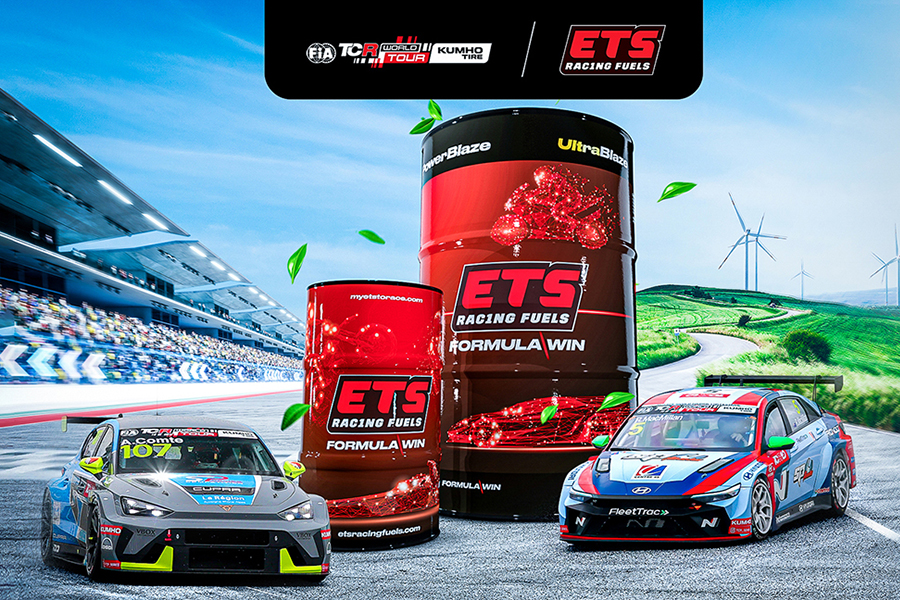
In its efforts of promoting a cleaner motorsport, WSC continues its partnership with Haltermann Carless that through ETS Racing Fuels will supply sustainable fuel to the Kumho FIA TCR World Tour for a second consecutive season.
At the heart of the initiative is Renewablaze TCR R50, ETS’ high-performance racing fuel with a 50% share of certified advanced sustainable components derived from biomass waste. The fuel has been developed specifically for TCR competition and engineered to meet the demands of touring car racing.
Approved by WSC and fully compliant with FIA regulations, Renewablaze TCR R50 delivers a 30% reduction in greenhouse gas emissions compared to conventional fossil fuels, without compromising performance.
Already proven throughout the 2025 season, the drop-in fuel requires no engine modifications and has been successfully validated by OEM manufacturers, confirming seamless integration across the TCR platform.
Renewablaze TCR R50 is available for adoption across other TCR series worldwide, reinforcing the category’s commitment to measurable and creditable sustainability progress.
WSC President Marcello Lotti said: “We are proud to continue our partnership with ETS Racing Fuels for the upcoming season of the Kumho FIA TCR World Tour. The use of their sustainable fuel for the second consecutive season is testament of our efforts in reducing gas emissions during our events. We are looking forward to continuing our partnership in the future, with the aim of further improving the sustainability of TCR competition, while showing that performance is not affected by the transition towards a cleaner motorsport.”
Yann Labia, Global Manager of ETS Racing Fuels, added: “We are delighted to continue powering the Kumho FIA TCR World Tour with our sustainable solution. Renewablaze TCR R50 has been engineered as a true drop-in racing fuel, delivering consistent performance across varying climates and race conditions.
In 2025, we saved 27,621 kg of CO₂. It would take around 1,250 trees an entire year to absorb that amount of carbon – exactly why we continue to push for sustainable fuels in motorsport. Every kilogram of CO₂ avoided reduces the burden on our planet. The 2026 season will further demonstrate that sustainable fuel technology is ready today to power internal combustion racing while significantly lowering emissions.”